Oven & Stove Repair Concord
Gas or electric oven not heating? Burner won’t light? Glass-top cooktop with a dead burner? We diagnose and repair ovens, ranges, stoves, and cooktops throughout Concord, Harrisburg, and surrounding Cabarrus County. All major brands. Same-day available.
Gas & Electric Oven, Range & Stove Repair in Concord
We work on all configurations of residential cooking appliances. If the brand is sold in Concord, we’ve worked on it.
Why Won’t My Electric Oven Heat?
When an electric oven fails to heat, the fault is in one of four places: the heating element, the power supply circuit, the temperature sensor, or the control board. The diagnostic order matters — starting with the wrong component wastes time and money.
The Bake Element
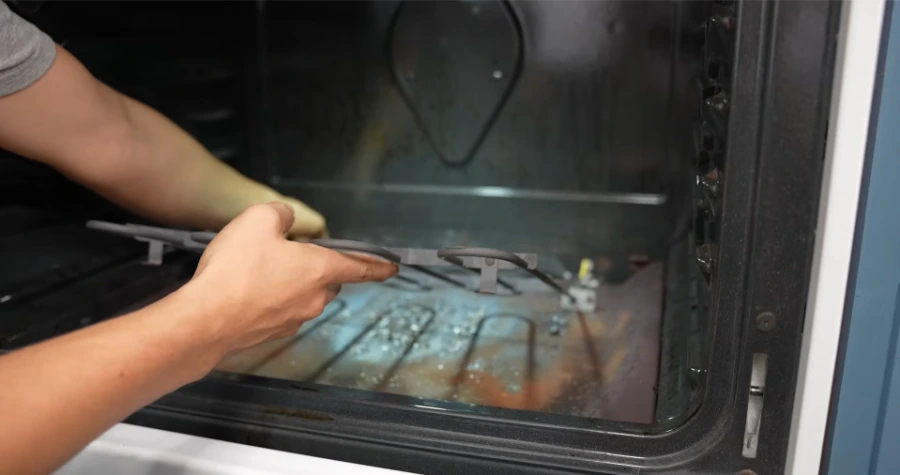
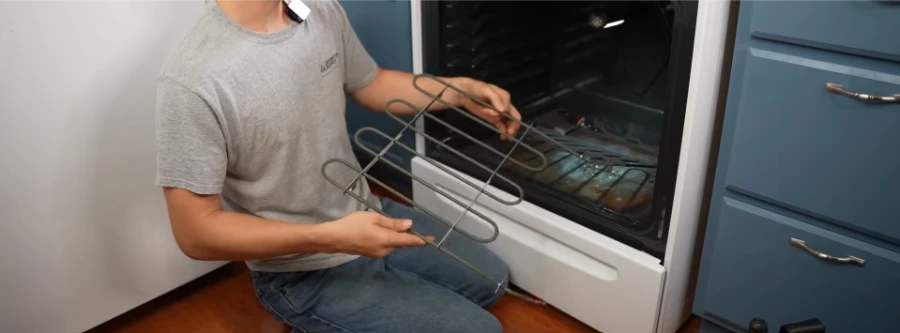
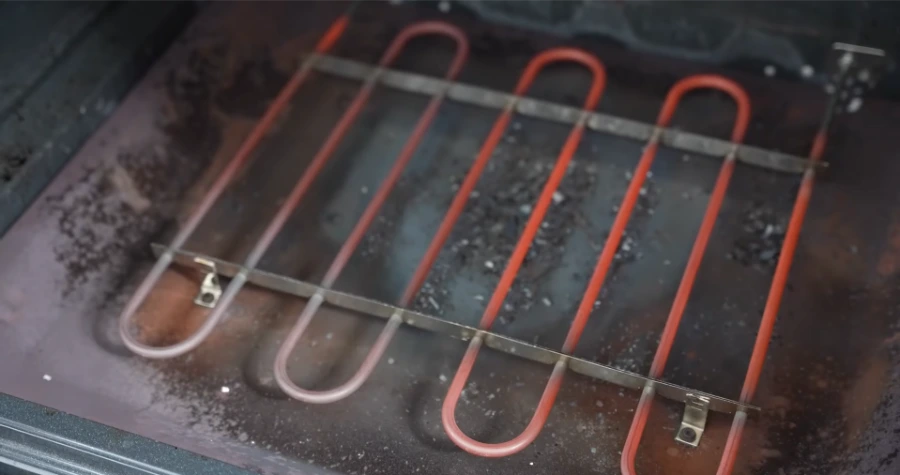
The bake element is the lower heating element in an electric oven. It’s the most common failure point. When it fails, it typically breaks internally or develops a short to ground. A visually cracked or burned element is the most straightforward diagnosis — but not every failed element shows visible damage. A continuity test confirms whether the circuit is intact.
An element that fails via a short to ground — rather than a simple internal break — can put a momentary surge through the control circuit. This is why we check the relay on the control board after replacing an element that failed that way. Not every element failure damages the board, but a short-to-ground failure can, and we verify rather than assume.
The 240-Volt Circuit
Electric ranges and wall ovens run on a 240-volt circuit — two 120-volt legs from the breaker panel, both required for the oven to heat. If one leg trips at the breaker, something counterintuitive happens: the oven controls still have power (they run on one leg), so the display works and the oven responds to button presses. But the oven won’t heat. Before opening the appliance, we confirm that both legs of the circuit are delivering voltage. This catches a surprising number of service calls early.
The Temperature Sensor
The temperature sensor (sometimes called the RTD or oven probe) tells the control board what temperature the cavity has reached. When it reads incorrectly, the board either under-heats — oven never reaches target temperature — or over-heats. A sensor out of its normal range typically triggers an error code. Sensor resistance at room temperature is model-dependent; the specification in your service manual is the reference.
The Control Board
A relay on the control board closes to deliver power to the element when the sensor calls for heat. When that relay fails — sticks open or sticks closed — the oven either won’t heat at all or won’t stop heating. We test the relay’s function before recommending a board replacement; a failed relay is sometimes the only issue.
Oven still not heating after an element replacement? If the oven heats but plateaus well below the setpoint — around 190°F, for example — the new element is working but something is limiting power delivery. Common causes: a relay not fully closing on the control board, a wiring issue, or a single-leg circuit problem. We trace the power path before recommending a board.
Why Won’t My Gas Oven Ignite?
Gas oven failures almost always trace back to the igniter, the gas valve, or the temperature sensor. The igniter is by far the most common cause — but not for the reason most people expect.
The Gas Igniter
In most modern gas ovens, the igniter does two jobs: it creates ignition, and it draws enough current to open the gas safety valve. As igniters age, they often weaken and glow without getting hot enough to open the valve. The oven clicks or glows, but gas never flows.
Signs of a weakening igniter: it glows orange but the oven doesn’t light within 90 seconds; it glows very dimly; or the oven lights intermittently. We test the igniter’s current draw to confirm before replacing it.
The Gas Valve
After the igniter draws sufficient current, the gas valve opens to allow gas flow. When the valve fails — either the valve body or the internal solenoid — gas doesn’t reach the burner even with a functional igniter. Valve testing requires the right equipment and is not a homeowner diagnostic.
The Oven Sensor
The oven sensor plays the same role in a gas oven as in an electric oven: it reports cavity temperature to the control board. A failed sensor produces the same symptoms — no heat, uncontrolled heat, or error codes — in either appliance type.
Why Won’t My Oven Reach Temperature?
Temperature problems in both gas and electric ovens generally come down to the sensor or the control board. A sensor reading high causes the board to cut heating cycles early — the oven never reaches target because the board thinks it already has. A sensor reading low causes the board to keep heating — the oven overshoots. Either condition produces inconsistent cooking results before the oven fails completely.
Electric Range & Cooktop Burner Problems
Surface burner failures on electric ranges involve the element itself or the switch that controls it. Understanding which helps avoid replacing the wrong part.
The Infinite Switch
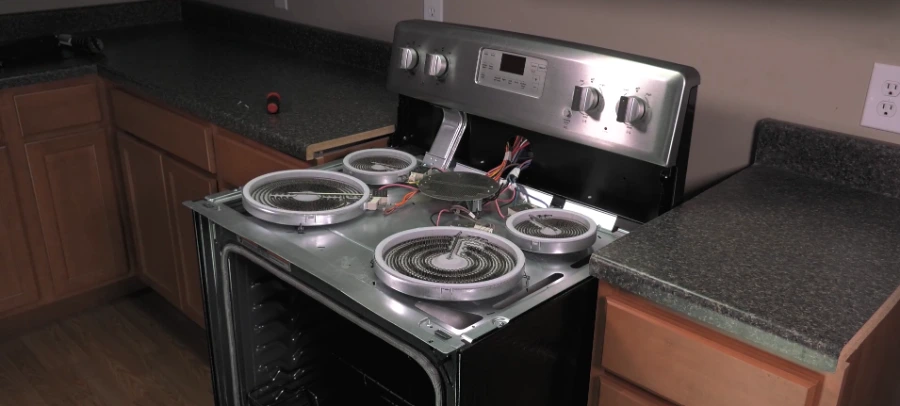
The infinite switch controls surface burner temperature by cycling power on and off at a duty cycle matching the selected heat level. When it fails, the burner may stop working entirely — or it may get stuck delivering maximum heat regardless of the control position. A burner that keeps burning at full power even when turned to “low” is a strong indicator of a failed infinite switch. Don’t leave a burner unattended if you’re seeing that behavior.
The Surface Element
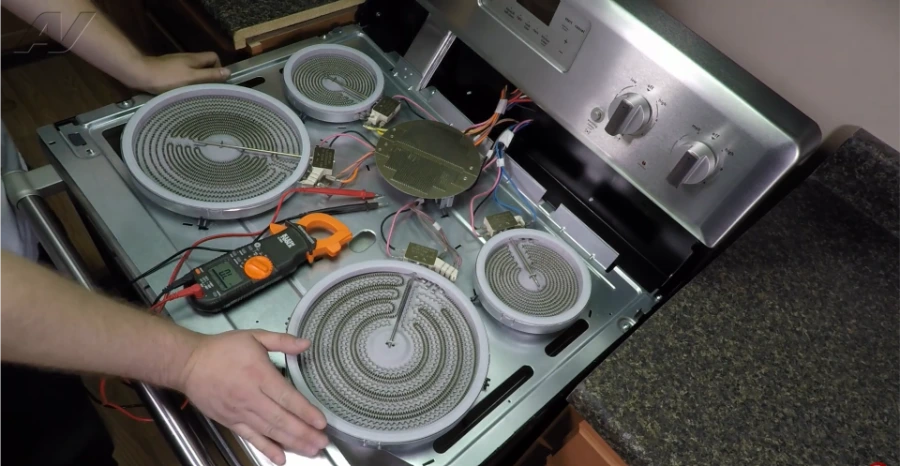
The surface element (the coil or, on smooth-top ranges, the radiant element beneath the glass) fails by burning out internally. Coil elements show hot spots — areas that don’t glow evenly — before failing completely. Smooth-top elements are less visible, but failure is similar: the element loses continuity and the burner stops heating.
Can a Glass-Top Stove Burner Be Repaired?
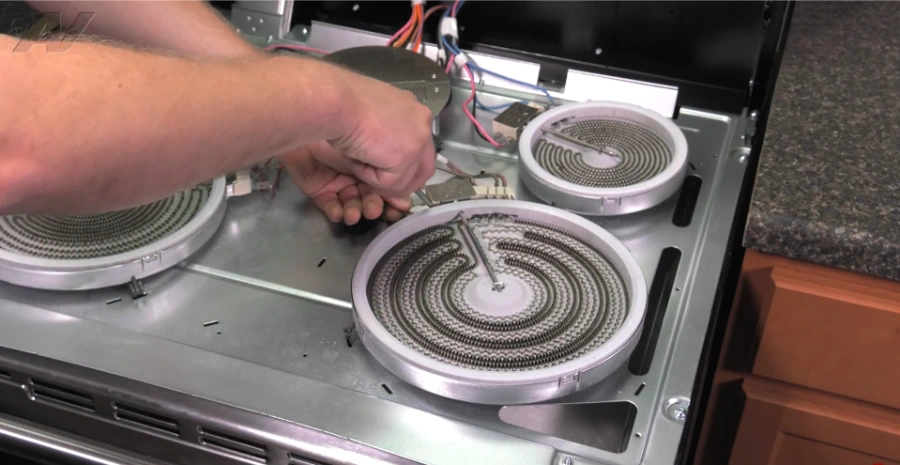
Yes — in most cases without replacing the glass. Glass-top burner failures are almost always a failed radiant element or infinite switch beneath the glass surface. The glass itself only needs replacement if it’s physically cracked or chipped. A burner that simply won’t heat is almost always an element or switch problem, not a glass problem — and the repair cost difference is significant.
Gas Burner Won’t Light, Keeps Clicking, or Won’t Stay Lit
Gas surface burner problems involve the spark module, the spark electrode, and the burner assembly itself. The symptom pattern usually tells us which.
Single Burner Won’t Light
When one burner won’t click or ignite while others work, the fault is typically that burner’s spark electrode or the wire leading to it. Electrodes crack, corrode, or get coated with spilled food — all of which prevent a clean spark. Cleaning the electrode and burner assembly resolves the problem more often than replacement, but a cracked electrode needs to come out.
One Burner Keeps Clicking After You Turn It Off
Persistent clicking on a single burner after the knob is off is almost always caused by moisture or dried spill residue near that burner’s spark electrode. The ignition module interprets the conductivity as a grounding event and fires continuously. Thoroughly cleaning the burner cap and electrode area — and making sure everything is dry — resolves this in the majority of cases. If it doesn’t clear, the electrode or wiring at that burner needs inspection.
All Burners Stop Clicking at the Same Time
When all burners lose spark simultaneously, the shared spark module is the primary suspect. All electrodes on a range connect back to one ignition module; if that module fails, every burner loses spark at the same time. Before condemning the module, we verify power to the module and check wiring continuity — a loose connection or tripped breaker can produce the exact same symptom.
Burner Lights but Burns Unevenly or Won’t Stay Lit
An uneven or lifting flame typically comes from a partially blocked burner port. Gas orifice ports get clogged with boiled-over food, grease, and cleaning residue. A burner that lights and then goes out may have a faulty thermocouple or flame sensor on models that use them — the sensor doesn’t confirm ignition, the gas valve shuts off as a safety measure.
Oven Door Problems
Oven door issues are more common than most people expect — and a door that doesn’t seal correctly is a real cooking performance problem, not just cosmetic.
Door Hinges
Over time, hinge springs lose tension, the hinge mechanism develops play, or the hinge body bends. Signs: the door doesn’t close fully (leaving a gap at the top or bottom), the door feels heavier than it used to, or it droops when open. A door that doesn’t seal lets heat escape — the oven can’t hold accurate temperature.
Door Gaskets
The fiberglass or silicone seal running around the door perimeter compresses and hardens with age and heat cycling. A hardened gasket can’t maintain a seal. Gasket replacement is one of the more straightforward oven repairs and noticeably restores cooking performance.
Door Glass
Oven door glass can be replaced on most models without replacing the entire door assembly. The inner pane is more prone to cracking than the outer pane due to thermal cycling. A cracked inner pane loses insulating capacity — replace it rather than leaving it.
Self-Clean Door Lock
A door that locks during a self-cleaning cycle and won’t release afterward is a common service call. This is almost always a motor or switch failure in the locking mechanism — not a structural problem — and it’s fixable without replacing the door assembly.
Gas Oven & Range Safety: What’s Normal and What Isn’t
When an Oven Element Arcs or Sparks
If you see an electric oven element arcing, sparking, or flashing — cut power at the circuit breaker immediately. Not at the oven control knob.
A shorted element that has developed a fault path to ground can continue to arc even after the oven is “turned off” at the knob. The control knob tells the board to stop calling for heat — it doesn’t physically interrupt the fault. The circuit breaker cuts both legs of the 240-volt supply. That’s the safe stop.
After cutting power, don’t use the oven until it’s been inspected. An element that failed via a short to ground may have damaged the wiring or relay circuit it’s connected to.
What Does Oven & Stove Repair Cost?
Repair costs vary by component, brand, and parts availability. These ranges reflect typical completed jobs; your quote is confirmed before any work begins.
Oven & Range: Repair or Replace?
The answer depends on age, repair cost, and the appliance’s overall condition. Here’s how we think about it.
| Appliance Age | Typical Guidance | Caveat |
|---|---|---|
| Under 8 years | Repair almost always makes sense. Remaining useful life is substantial; replacement cost is high. | Multiple simultaneous failures change the math. |
| 8–15 years | Compare repair cost to installed replacement cost. A single-component repair on a solid appliance is typically worth it. | Two or more major failures simultaneously may point toward replacement. |
| Over 15 years | Doesn’t automatically mean replace. Well-maintained ranges run 20+ years. Evaluate the appliance’s overall condition. | If multiple components are failing, we’ll say so clearly. |
A note on control board replacements: Boards are expensive, and recommending one before confirming the fault makes the economics worse. We don’t recommend board replacement until we’ve ruled out less expensive upstream causes. If the board is under any manufacturer or extended warranty, let us know before your appointment.
All Major Oven & Range Brands Serviced
Don’t see your brand? Call — we service most residential brands. We do not service commercial ranges, induction cooktops, or built-in microwave/oven combinations where the microwave has failed.
How a Service Call Works
From your first call to a properly working oven or range — here’s what the service process looks like.
Serving Concord, NC and Surrounding Communities
Our primary service area centers on Concord, North Carolina — including Harrisburg, Kannapolis, Midland, Mount Pleasant, and all of Cabarrus County.
We also repair other appliances throughout the area:
Oven & Range Repair — Common Questions
Oven or Stove Not Working?
Same-day appliance repair in Concord across all of Cabarrus County. Diagnosis before any repair.
(704) 440-5622