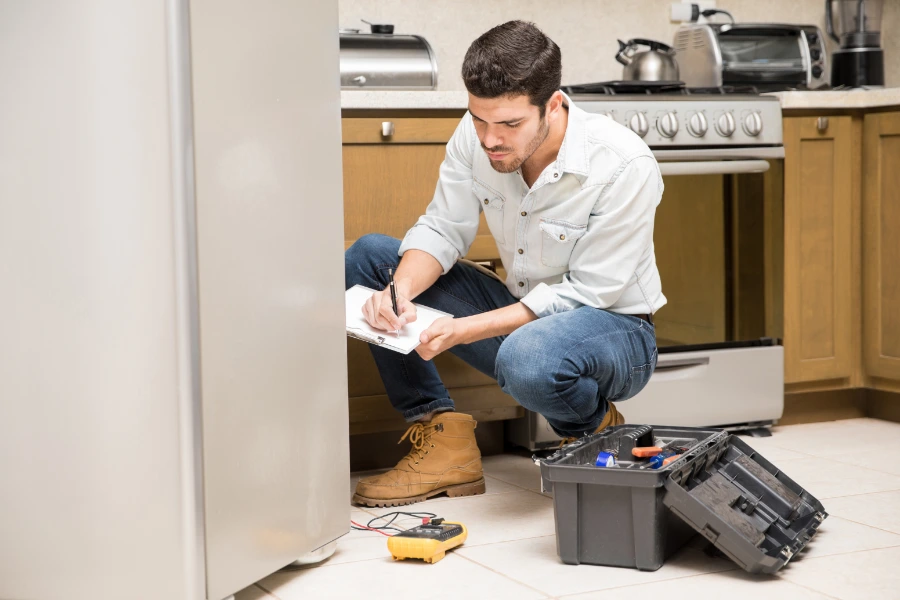
Refrigerator Repair Concord
Fridge not cooling? Ice maker stopped? In a Concord summer, a failed refrigerator puts your food at risk within hours. We diagnose and repair refrigerators the same day across Cabarrus County — all brands, including LG and Samsung.
How We Diagnose Refrigerator Problems in Concord, NC
Roughly 75% of refrigerators that “stop working” have a problem with an electrical component, a fan, a defrost system, or dirty condenser coils — not the sealed refrigerant system. Knowing how the parts work together tells you which problem you’re actually looking at.
The core refrigeration loop: The compressor pumps refrigerant (R134a in most residential units) through the system. It travels to the condenser coil, where it releases heat, then through a capillary tube into the evaporator coil inside the freezer. At the evaporator the refrigerant absorbs heat from the air, cooling the interior. It returns to the compressor as low-pressure gas and the cycle repeats.
Airflow and the evaporator fan: In a standard single-evaporator refrigerator, all cooling happens at the evaporator coil in the freezer. The evaporator fan pulls air across those coils and circulates cold air through the freezer. That same fan sends cold air down through a channel in the divider wall into the refrigerator compartment below.
The damper: A small door or flap — the damper — controls how much cold air flows from the freezer into the refrigerator section. On older mechanical units it’s a manual setting; on modern electronic refrigerators it’s motorized, controlled by the main board based on thermistor readings. A stuck-closed damper means a warm refrigerator section even with a perfectly functioning freezer.
The defrost system: Because the evaporator coil runs at around −15°F, frost accumulates on it naturally. Frost-free refrigerators run an automatic defrost cycle — typically every 24 hours of run time — where a defrost heater melts that frost. A defrost thermostat monitors coil temperature to prevent overheating. When any part of this system fails, frost builds up until it blocks airflow entirely, warming the refrigerator even while the freezer stays cold.
The compressor, condenser fan, and thermostat: These three components run simultaneously when cooling is called for. If the evaporator fan is running and the condenser fan is running, the thermostat is functioning — which narrows the problem to the compressor or the refrigerant circuit. A technician who confirms two fans are working can immediately redirect their attention to the compressor and sealed system.
Is Your Refrigerator Doing Any of These?
These are the problems we diagnose most often in Concord area homes. Each symptom points to a specific set of likely causes — we track the fault chain from symptom to component to repair decision.
Symptom → Cause → Test → Repair Decision
This is how a refrigerator technician actually thinks through a diagnosis — and why the process matters for getting the right repair, not just the most obvious one.
Why is my refrigerator not cooling at all — even the freezer is warm?
When neither compartment is cold, the three main components to verify are the evaporator fan (inside the freezer), the condenser fan (at the back or bottom), and the compressor. If you confirm the evaporator fan is running, you know the thermostat or control board is calling for cooling. If the condenser fan is also running but the compressor isn’t, the start relay becomes the primary suspect.
The start relay plugs directly onto the compressor body and gives it the electrical boost it needs to start. When the relay fails, you typically hear the compressor click on for a few seconds and then cut off. Testing with a multimeter in continuity mode gives a definitive answer: a good relay shows continuity between its terminals; an open circuit means it’s failed. Some technicians shake the relay — internal rattling indicates broken contacts — but continuity testing is the definitive method.
To verify the compressor windings themselves: measure resistance across the start and run terminals (with the relay removed). On a typical residential compressor, the run winding should read approximately 2.75–3.1 ohms and the start winding approximately 5.85–6.3 ohms. Both readings should show open circuit to the compressor body (ground). Normal winding resistance with a failed relay means the compressor is mechanically sound — the relay is the problem.
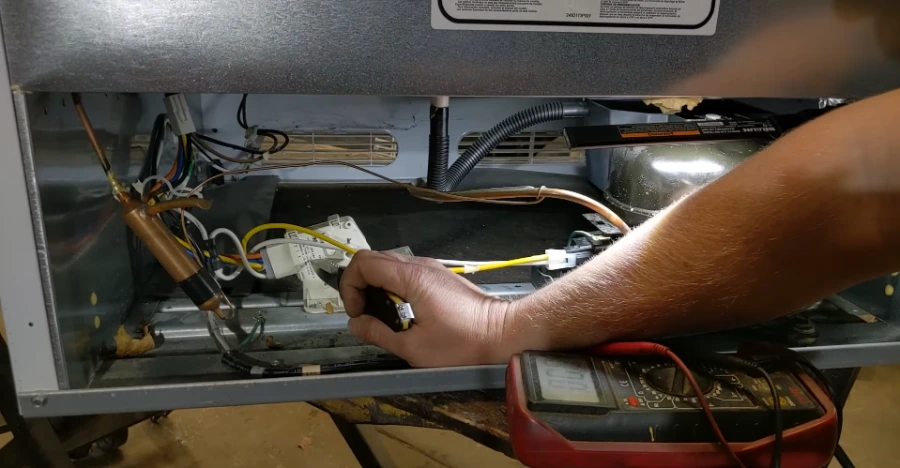
Compressor Clicking On and Off — Five Seconds at a Time
Symptom: Refrigerator not cooling. Compressor clicks on briefly, runs for about five seconds, then cuts out. Repeats every few minutes.
Inspection: Condenser fan running. Evaporator fan running. Lights on. Compressor tries to start but can’t sustain.
Test: Relay removed. Multimeter in continuity mode between L terminal and common terminal — no reading. The overcurrent protection inside the relay had failed in the open position. Compressor windings tested good: run winding ~3.1 ohms, start winding ~6.3 ohms, no shorts to ground.
Repair decision: Replace the start relay. Compressor started immediately on first attempt with the new relay installed.
My compressor is running but nothing is cooling — what does that mean?
This is the sign of a possible sealed-system problem. When the compressor is running, the high-pressure discharge line coming off the compressor should feel warm to hot — on a properly functioning R134a system it operates at roughly 125–150 psi, corresponding to about 100–110°F. If the discharge line and condenser feel room-temperature while the compressor is running, one of three things is happening: low or no refrigerant, an inefficient compressor with worn internal valves, or a restriction in the capillary tube from oil buildup.
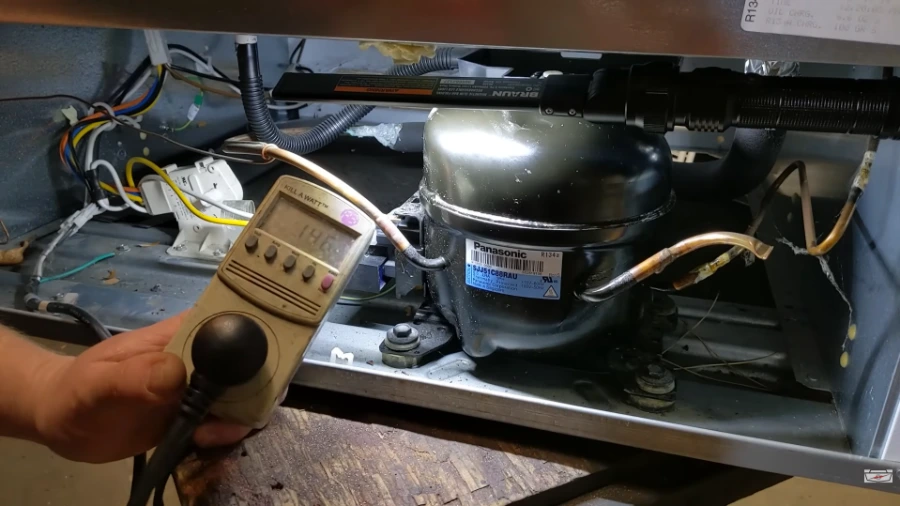
The capillary tube is a very narrow tube that separates the high-pressure condenser side from the low-pressure evaporator side. Oil from the compressor can accumulate inside this tube — particularly if the condenser fan has failed or the condenser coils have been dirty for a long time, causing the system to run excessively hot. Even a small amount of oil inside that narrow bore can restrict refrigerant flow enough to stop cooling entirely. A sealed-system diagnosis requires pressure gauges to measure low-side and high-side pressures; this is not a homeowner repair and requires EPA 608 certification to handle refrigerant.
Why is my freezer cold but the refrigerator section warm — and there’s ice in my freezer?
Ice in the freezer confirms the compressor is working and the sealed system is functioning. The problem is entirely airflow. The refrigerator compartment depends on cold air flowing down from the freezer through a channel and damper. Three things can block that airflow: a failed evaporator fan, a stuck damper, or frost buildup on the evaporator coil from a defrost system failure.
The defrost system failure pattern is the most common cause in Concord homes. Each defrost cycle — triggered every 24 hours of run time by the defrost timer or control board — runs a heater element along the evaporator coil to melt accumulated frost. When the defrost heater, defrost thermostat, or timer fails, frost accumulates unchecked. Once the frost becomes thick enough, it acts as insulation and blocks the fan’s airflow channel. You’ll notice the refrigerator warming before you ever see visible frost from the outside.
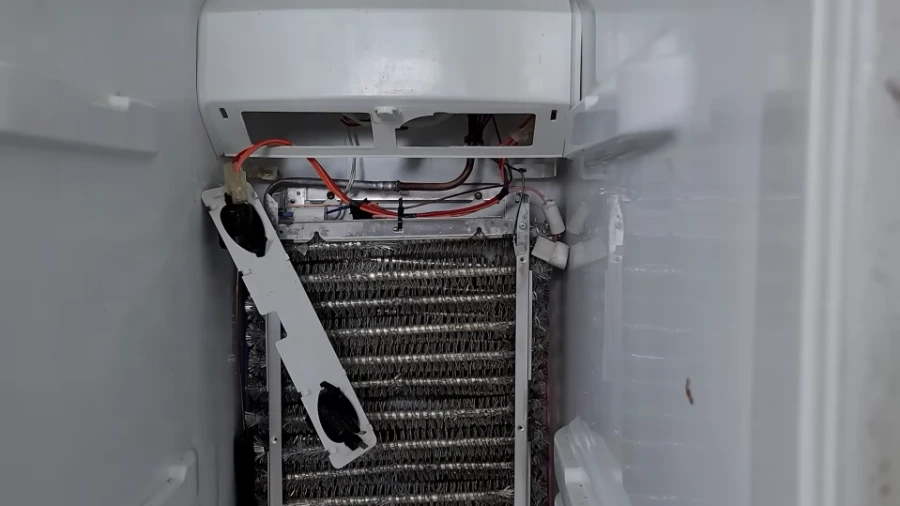
Testing the defrost heater: disconnect it and check resistance with a multimeter. A good heater reads 20–40 ohms; an open circuit (no reading) means it’s failed and needs replacement. The defrost thermostat should show continuity when cold (below 30°F) and open circuit when warm — if it shows continuity at room temperature, it has failed closed. Both components are typically replaced as a pair given their combined low cost relative to a second service call.
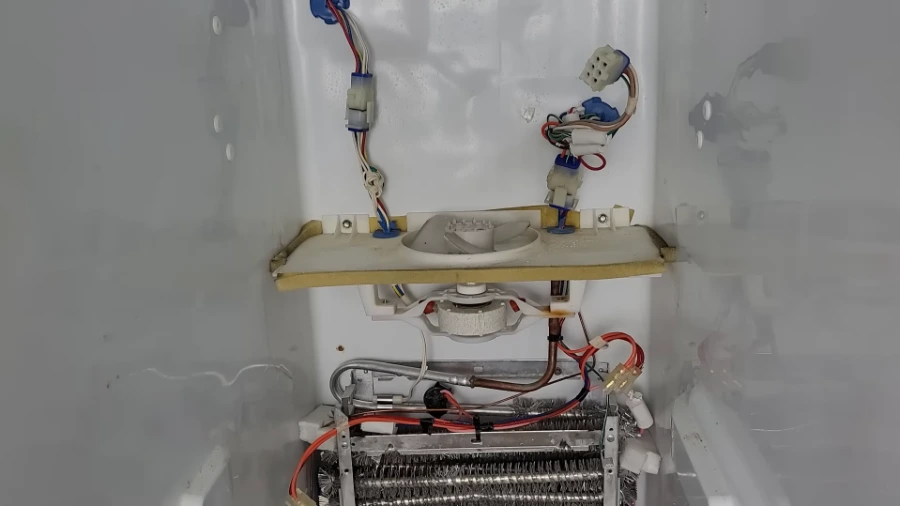
What can cause the evaporator fan to run in the wrong direction — and why does that matter?
Refrigerator evaporator fan motors are directional. Installing a motor that spins the wrong way reverses the airflow — instead of pulling air across the evaporator coils and directing it through the damper channel into the refrigerator, it blows air backward through the return openings, bypassing the damper entirely. In one documented scenario, a bottom-mount refrigerator went from not cooling (failed fan) to freezing everything solid (wrong-direction replacement fan) after service. The fix required ordering the correct motor for that specific refrigerator model. Fan motors cannot be corrected by flipping the blade; the motor itself must turn the correct direction.
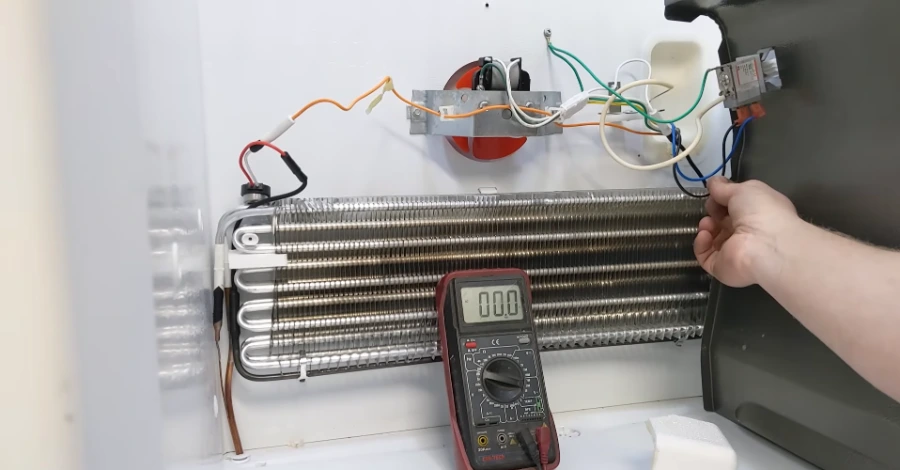
Real Refrigerator Repair Work
The photos in this section show real refrigerator service work and illustrate common diagnostic and repair situations — not stock photography. Different photos may be from separate service situations. What you see here is what refrigerator service work actually looks like.
Inside a Defrost System Inspection: What a Frost-Covered Evaporator Looks Like
One of the more common causes of a refrigerator warming up — especially when the freezer continues to cool normally — is a problem with the defrost system. The photos below show what that kind of inspection involves and what a defrost problem looks like inside the refrigerator.
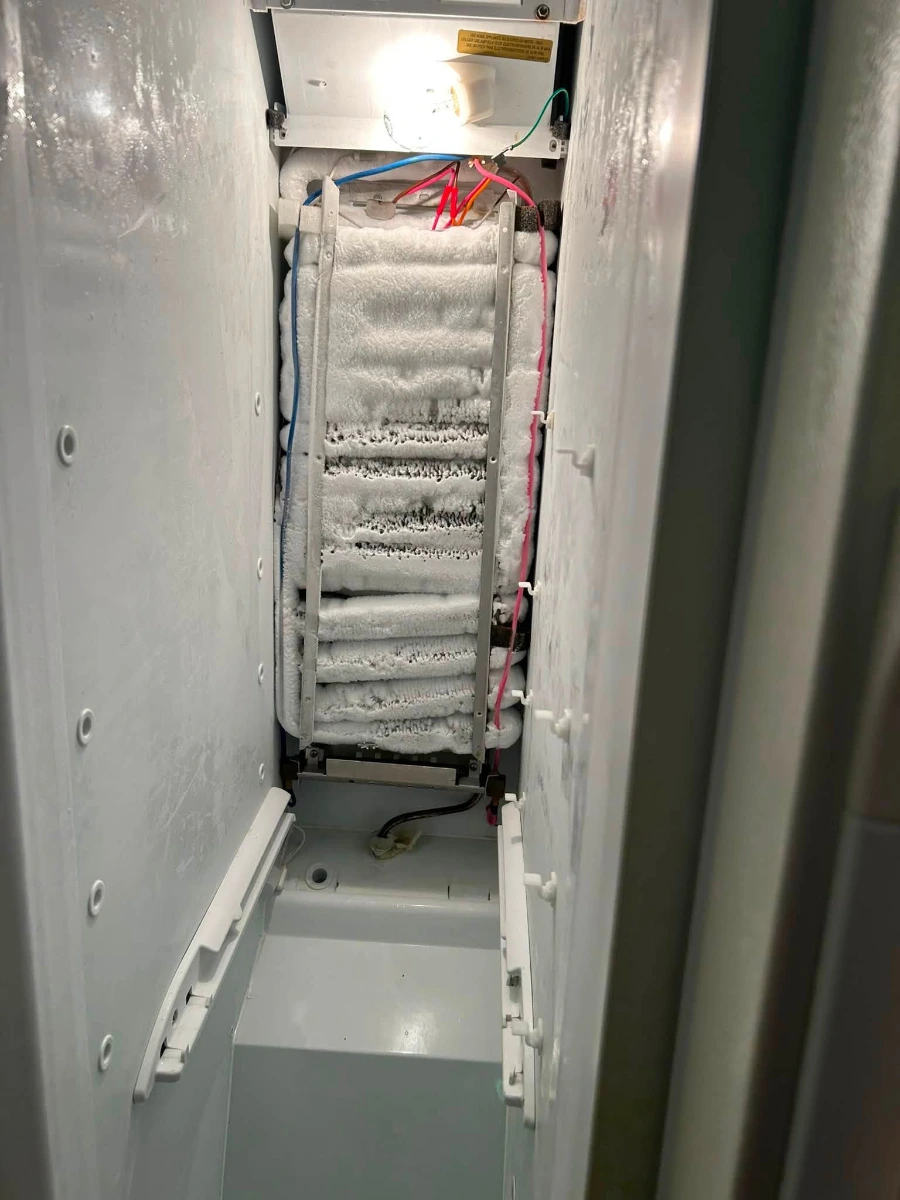
The evaporator coil sits inside a sealed compartment at the back of the freezer. It is the surface that actually absorbs heat from inside the refrigerator. During a defrost cycle, the refrigerator briefly heats the evaporator area to melt accumulated frost and keep airflow open. When a component in that system fails, frost builds up unchecked. The coil becomes encased in ice, airflow drops, and the fresh food section warms up — even while the freezer continues to feel cold.
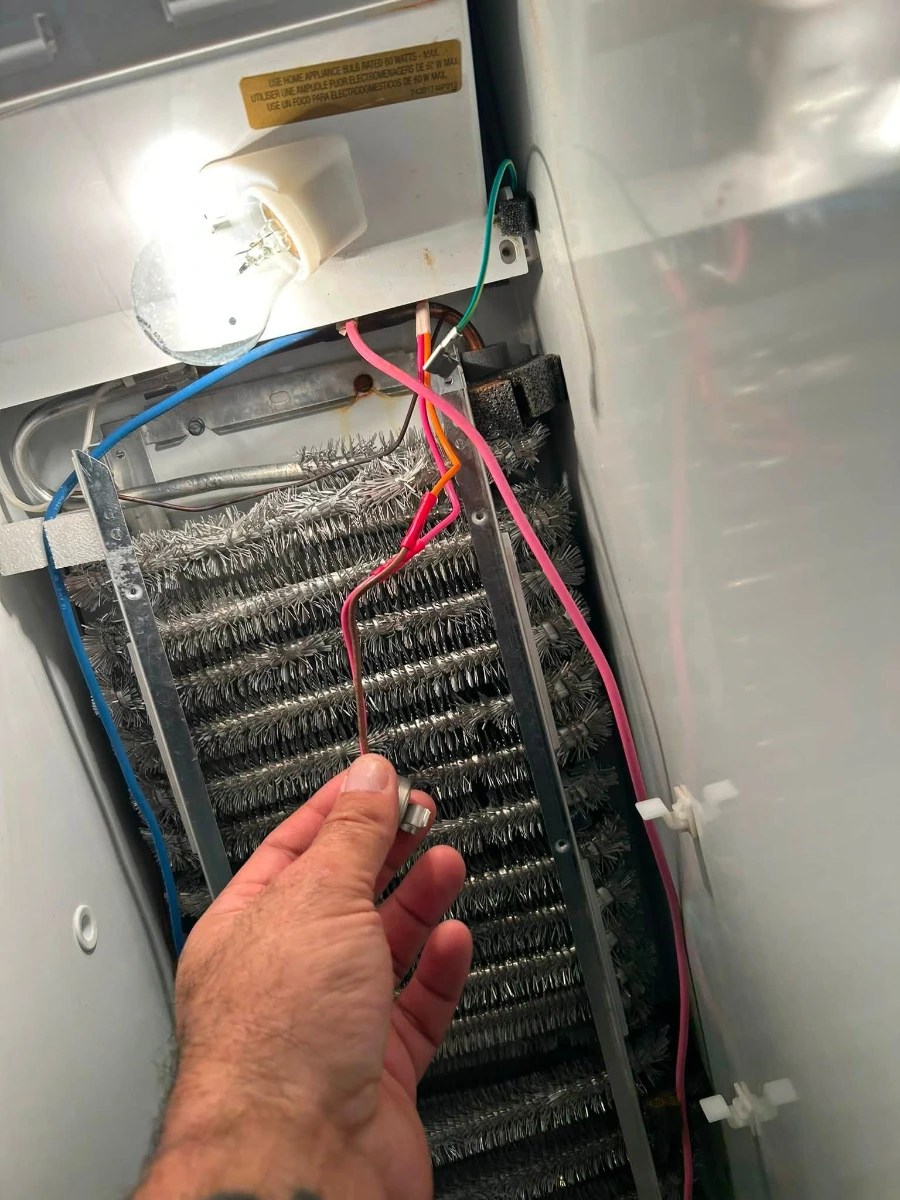
Diagnosing a defrost failure means testing each component individually. The defrost heater is checked for continuity. The defrost thermostat is checked to confirm it opens and closes as expected. The defrost timer or control board is verified to be initiating the defrost cycle on schedule. Only by isolating which component has failed can the correct repair be identified.
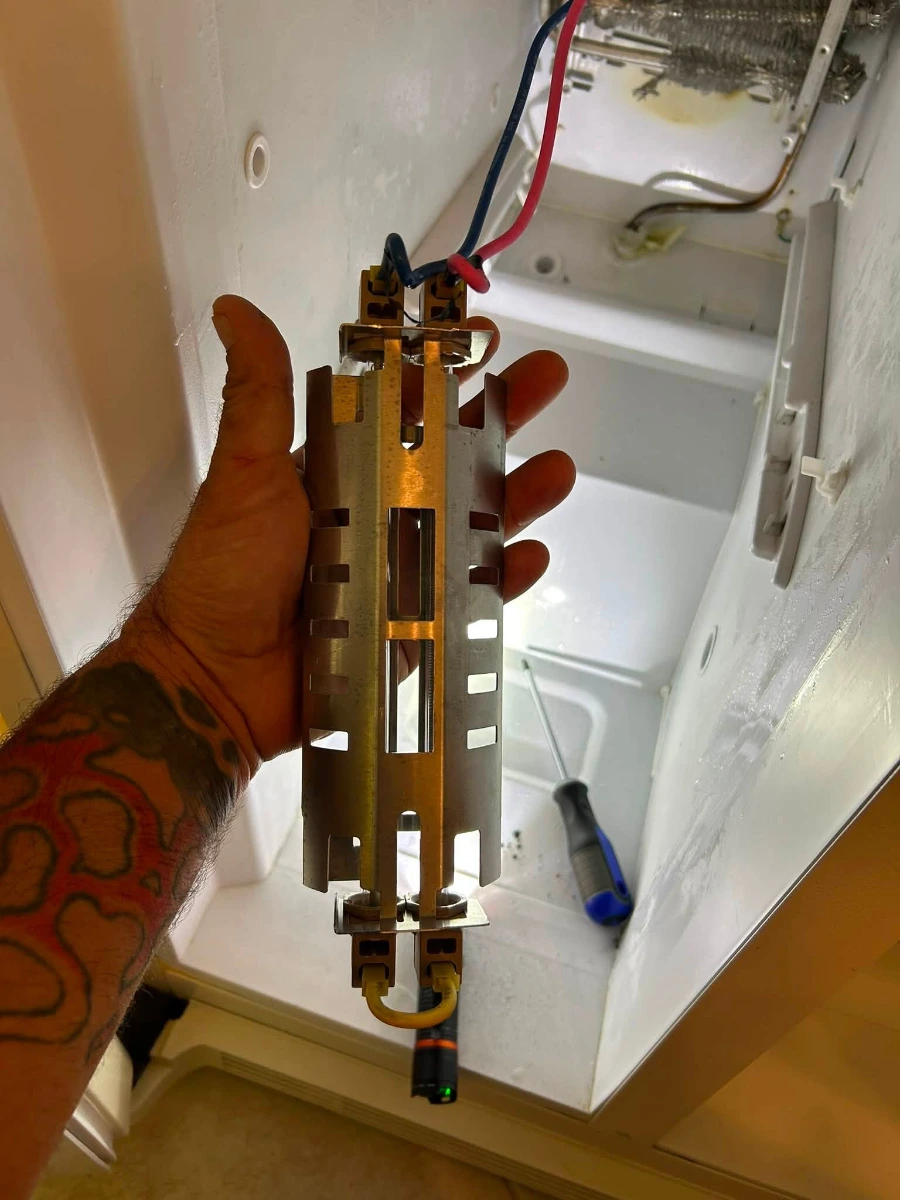
A frost-blocked evaporator is one of several reasons a refrigerator may stop cooling the fresh food section effectively. If your refrigerator matches this symptom pattern, our refrigerator not cooling guide covers the most common causes and what a diagnostic service call typically involves.
Fresh Food Section Not Cooling — A Damper Assembly Service Call
Another cause of a warm fresh food section — while the freezer continues to cool normally — is a problem with the damper assembly. Depending on the refrigerator design, the damper assembly may use a motorized air door to regulate cold-air flow into the fresh food compartment. A technician may begin by checking whether the damper is opening and closing properly and whether cold air is reaching the fresh-food section.
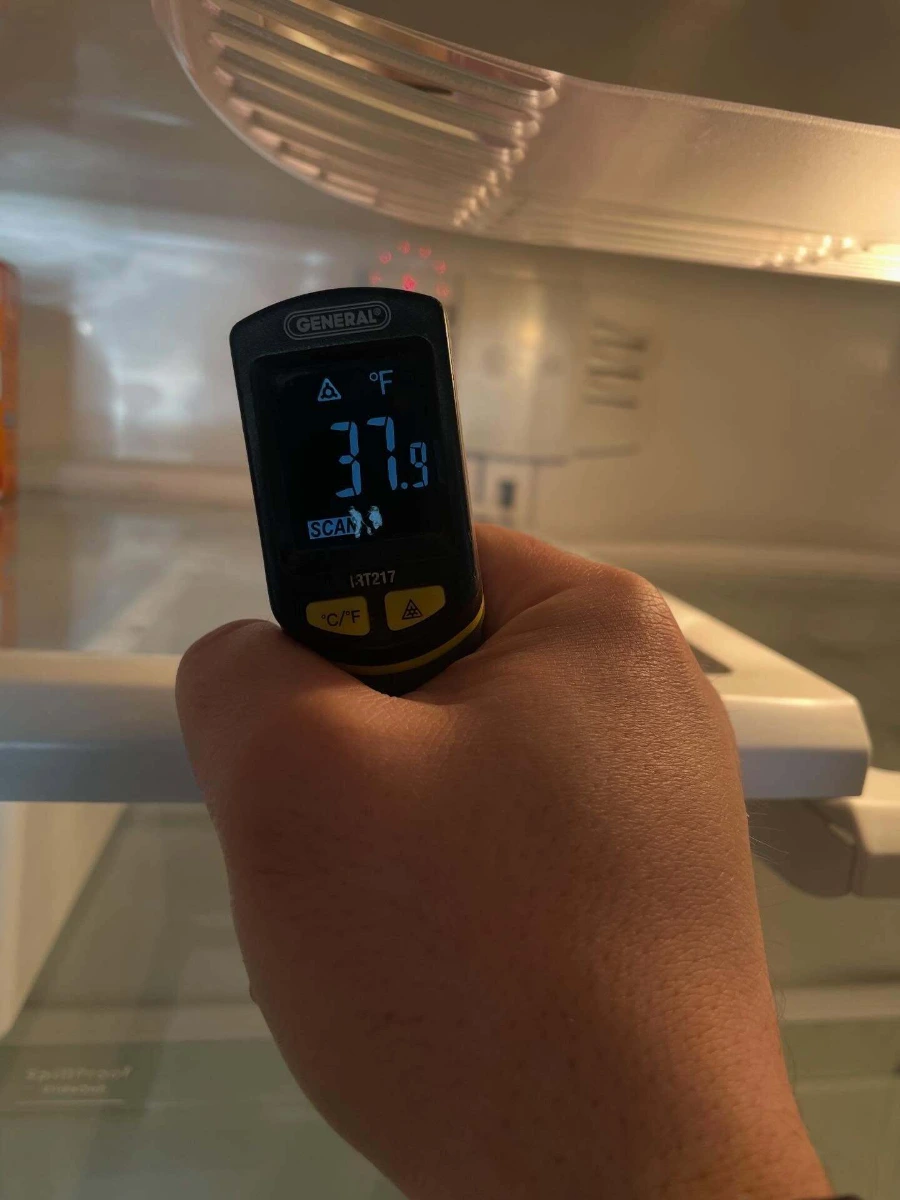
The fresh food section should remain within the manufacturer’s recommended temperature range. A warm fresh food section combined with a freezer that is still cooling is a specific symptom pattern — it points toward an airflow problem rather than a sealed-system failure, which narrows the diagnostic focus significantly.
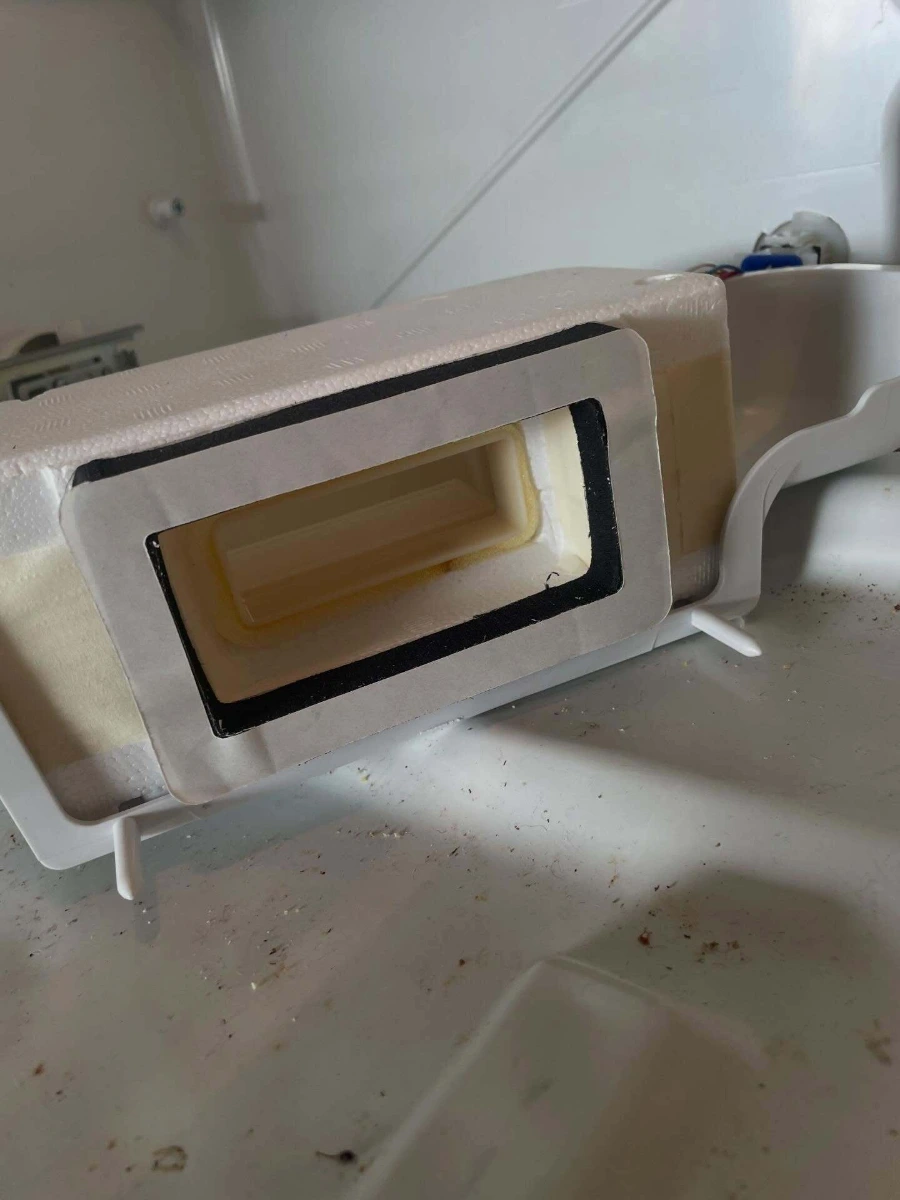
The symptom of a warm fresh food section with a normally cooling freezer can look identical to a defrost failure from the outside. That is why systematic diagnosis matters — both conditions present the same way but require different repairs depending on which component has actually failed.
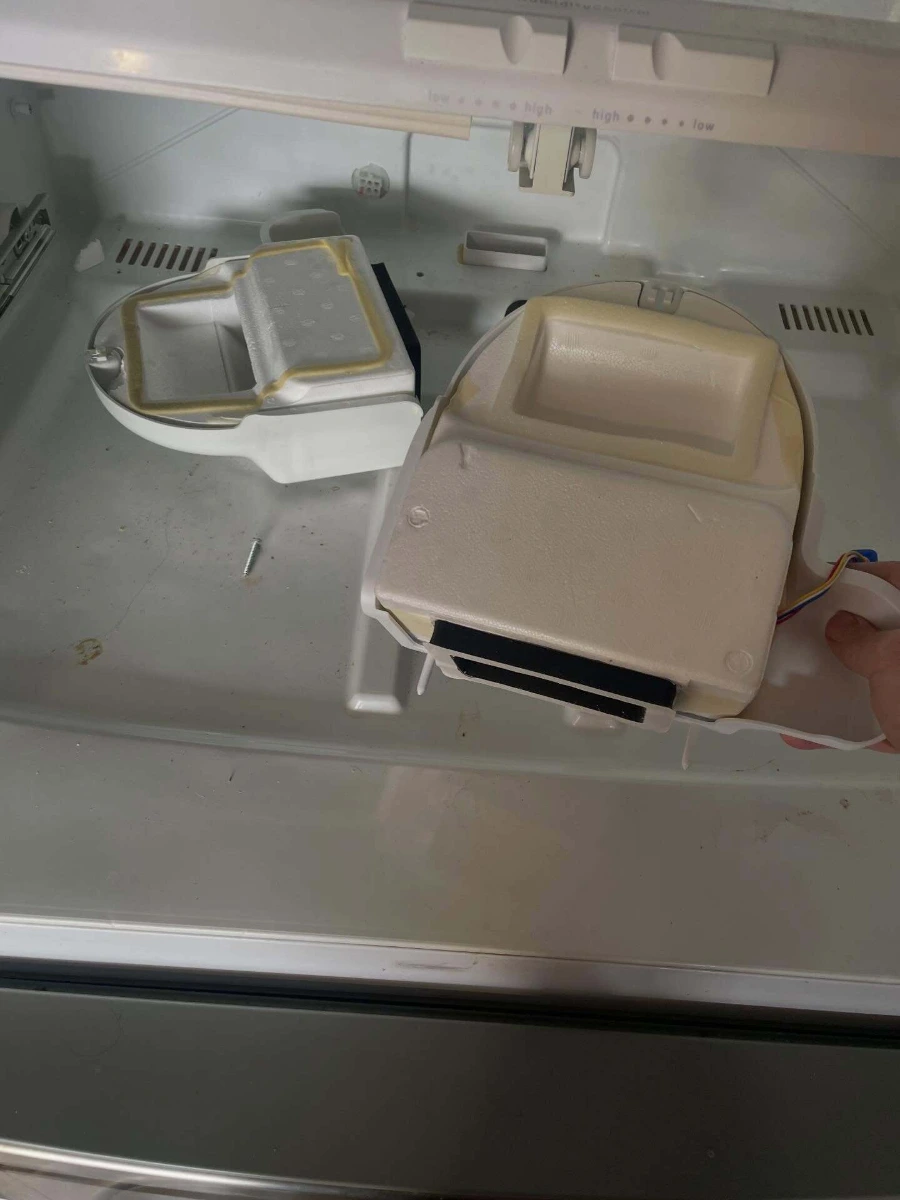
A damper assembly problem can be one possible cause of a fresh food cooling complaint. If the freezer is working but the refrigerator section feels warm, a diagnostic service call is the right first step — it identifies whether the problem is the damper, the defrost system, or something else entirely.
Is your refrigerator not cooling the way it should?
Schedule a diagnostic service call and we will identify the cause before recommending any repair. Book a Service Call
Dirty Condenser Coils: The Most Overlooked Cause of Refrigerator Problems in Concord Homes
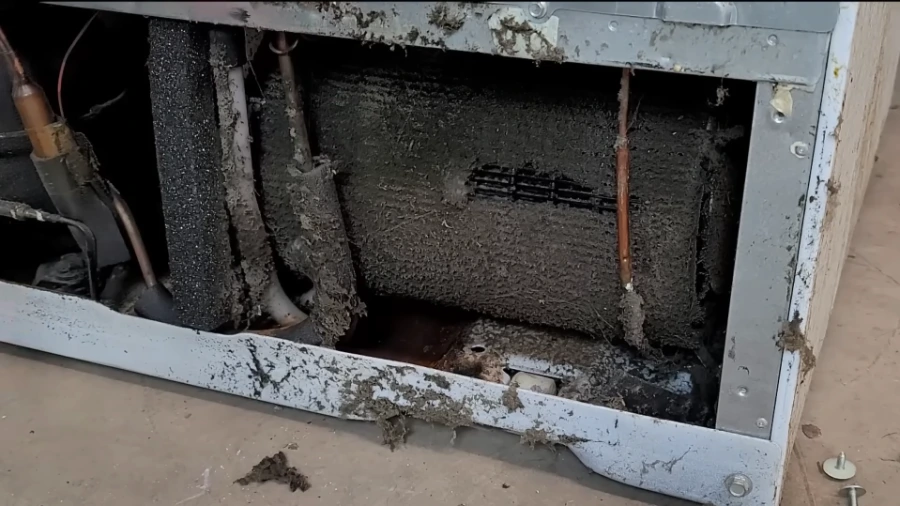
The condenser coil is where your refrigerator gets rid of heat — it’s the part of the system that transfers the compressor’s work out of the refrigerant and into the surrounding air. When these coils are coated in dust, lint, and pet hair, they can’t do that job efficiently.
The refrigerant runs warmer. The compressor runs longer. Temperatures inside the box drift above their set points. In Concord’s summer heat — where the humidity is high and heat indexes regularly hit 100–105°F — a refrigerator with dirty coils is working against two problems simultaneously: the heat it’s trying to remove from your food and the ambient heat it can’t shed efficiently.
Cleaning the condenser coils can improve refrigerator efficiency by up to 30%, which translates directly to lower electricity consumption and reduced wear on the compressor. In households with pets in Concord — particularly dogs and cats — coils can accumulate significant debris in three to six months.
Where are the condenser coils and how do I clean them?
Depending on your refrigerator model, the condenser coils are either at the back of the unit (behind a cardboard or metal access panel) or at the bottom front underneath the kick plate. You’ll need a refrigerator condenser brush — a long, flexible brush made specifically for reaching between coil fins — and a vacuum with a narrow attachment. Also clean the condenser fan blade while you’re there. Do this at minimum once a year; every six months if you have pets.
Why Concord Summers Are Hard on Refrigerators
Concord runs hot from June through September. Heat indexes of 100–105°F are normal, and external heat load forces the compressor to work significantly harder than it would in a controlled environment. Compressor wear, condenser coil buildup, and start relay failure all happen faster in our climate than in cooler regions.
Refrigerators in garages are particularly vulnerable. Uninsulated garages in Afton Village, Kings Crossing, and the newer Stallings Farm and Kellswater Bridge builds can reach 115°F in August. Most residential refrigerators aren’t rated to operate efficiently above 90°F ambient. A second fridge in the garage that stops cooling in summer is often suffering from heat stress rather than a component failure.
If your refrigerator is 8 years or older and starts struggling to hold temperature in July, the compressor is telling you something. It’s worth having it diagnosed before you end up losing a full load of groceries during a heat spell.
LG Refrigerator Repair in Concord, NC — Including Linear Compressor Issues
LG refrigerators — particularly French door models produced between roughly 2014 and 2020 — have a documented history of linear compressor failures. The linear compressor is quieter and more energy-efficient than a conventional compressor, but a subset of units developed reliability problems that resulted in a class-action settlement. LG extended the warranty on linear compressors to 10 years on many affected models.
Before authorizing any repair on an LG refrigerator with a suspected compressor failure, check whether your model is covered under the extended warranty. We can help you verify warranty status during the diagnostic visit. If the unit is out of warranty, compressor replacement for an LG French door refrigerator runs $400–$600+ including labor — at that price point, we’ll give you an honest assessment of whether repair or replacement makes more sense.
Is every LG cooling problem a compressor failure?
No. Many LG refrigerators that stop cooling have a defrost system failure or a failed evaporator fan — both of which are far less expensive repairs than a compressor. We test the actual components rather than assuming the worst. Many LG units we’ve seen in Concord that were assumed to need a compressor actually had a defrost issue or a relay problem that cost a fraction of a compressor job to fix.
All Refrigerator Brands Serviced in Concord, NC
Every major brand, every configuration — French door, side-by-side, bottom-freezer, top-freezer. LG and Samsung are the two brands we get the most calls for across Cabarrus County, partly because of their prevalence in newer construction and partly because their diagnostic systems require specific knowledge that some shops don’t have.
We also provide washing machine repair and dishwasher repair in Concord, NC — same brands, same same-day commitment across Cabarrus County.
What Does Refrigerator Repair Actually Cost in Concord, NC?
Real numbers, based on current Concord market rates. No “call for a quote” runaround.
Should You Fix It or Buy a New One?
We use the 50% rule as a starting point: if the repair cost exceeds 50% of what a comparable new refrigerator would cost, replacement is usually the smarter financial decision.
| Refrigerator Age | Repair Cost Threshold | Our Typical Recommendation |
|---|---|---|
| Under 7 years | Up to $450–$500 | Almost always worth repairing |
| 7–12 years | Up to $300–$400 | Most common repairs still worth it |
| 12–15 years | Under $200 | Depends on specific repair and brand |
| 15+ years | Minor repairs only | Usually replacement makes more sense |
Brand matters. A 10-year-old Sub-Zero or Thermador with a failed start relay is worth repairing. A 10-year-old entry-level unit with a failed compressor probably isn’t. We’ll give you the honest number and an honest recommendation — before you commit to anything.
What if my refrigerator has multiple things failing at the same time?
When a diagnosis reveals multiple failing components on a unit that’s 12 or more years old — for example, a defrost heater plus a failing fan motor plus a worn door gasket — that’s a signal the unit is at end-of-life. Repairing one component while others are ready to fail usually just delays the inevitable. We’ll flag this pattern and give you a replacement recommendation rather than pushing a repair that won’t last.
What to Expect During Refrigerator Repair in Concord, NC
From the first call to the moment your refrigerator is running again.
Refrigerator Repair Across Concord and Cabarrus County
Whether you’re in a newer build near Kellswater Bridge or an established home near Historic Downtown Concord, we’re in your area regularly.
Refrigerator Repair Questions — Answered
Refrigerator Not Working? Call Now.
Same-day appliance repair in Concord across Harrisburg, Kannapolis, and all of Cabarrus County. We answer live — no voicemail queues.